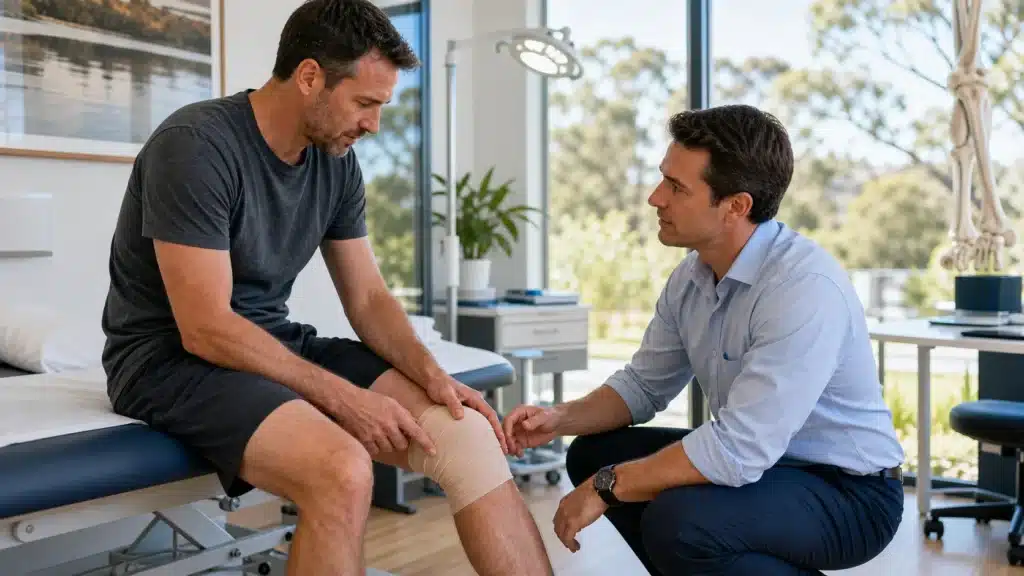
Red Flags After Knee Surgery Wagga Locals Should Not Ignore
Recovering from knee surgery in Wagga takes time, patience, and the right support. Some pain, swelling, and stiffness are expected, but certain changes are warning signs that something is not quite right. Knowing what is normal and what is not can help you act early and protect your long-term knee function.
In this article, we will walk through common red flags after knee surgery that locals in Wagga, Griffith, and the wider Riverina should watch for. We will go through pain, swelling, fever, breathing changes, and problems with walking, and explain when it is sensible to get a prompt review with an orthopaedic surgeon instead of waiting to see if things settle on their own.
Know When Knee Surgery Recovery Is Not Normal
After most knee operations, pain is usually strongest in the first few days, then slowly eases over the next weeks. Swelling often peaks in the first fortnight, then steadily goes down with rest, ice, elevation, and gentle movement. Step by step, it should become easier to bend and straighten the knee, stand up, walk to the letterbox, and then build up to longer distances.
Typical milestones many people notice include:
- Pain improving enough to sleep better at night
- Swelling slowly reducing so the knee feels less tight
- Walking distance increasing with the help of crutches or a frame, then without
- Being able to do your physio exercises a bit more easily each week
Recovery is rarely a straight line, but it should trend in the right direction. If things suddenly go backwards, that is often your body warning you. Acting early can help prevent long-term stiffness, ongoing pain, or serious problems like infection or blood clots. For people living in the Riverina, a timely local review is usually safer than waiting weeks hoping the issue will pass.
Pain That Gets Worse Instead of Better
Most people having knee surgery in Wagga are warned to expect some pain after joint replacement, ligament reconstruction, and arthroscopy or keyhole procedures. This pain is usually steady but manageable with prescribed medicines, icing, and rest. It should slowly improve over several weeks, not suddenly spike without a clear reason.
Red flags for pain include:
- New, sharp, or severe pain that feels very different to your usual ache
- Pain that is worse than in the first few days after surgery
- Pain that keeps you from sleeping even with medication
- Pain that stops you putting weight through the leg
- A big pain spike after a small twist, stumble, or step on uneven ground
You might notice this getting in and out of the car at the supermarket, walking across a bumpy paddock, or standing for long hours at work. If simple things you were managing last week suddenly become too painful, that deserves attention. Worsening pain with no clear reason usually needs a call to your surgeon or local doctor. If pain is extreme, comes with deformity of the leg, or you cannot stand at all, urgent care is safer.
Swelling, Heat and Wound Changes You Should Not Ignore
It is normal for the knee to swell after surgery. Swelling often gets worse at the end of the day, on warmer days, or after long drives, then eases with elevation, ice, and rest. As healing continues, it should slowly reduce over weeks rather than rapidly worsening.
What is not normal is sudden or uneven swelling, especially if it affects the calf. Warning signs include:
- One leg becoming much more swollen than the other
- A tight, painful calf that feels different to usual post-op swelling
- Redness spreading up or down the leg
- The knee or calf feeling hot with increasing pain
- Fluid, pus, or blood leaking from the wound
- Wound edges opening, or a bad smell from the dressing
These changes can be linked with infection or a blood clot, both of which can become serious if ignored. In cooler months, people are often less active, which can slightly increase the risk of clots if you are not moving much after surgery. If you see fast changes in swelling, colour, or wound fluid, this usually needs same-day review by your surgeon, GP, or the local emergency department.
Fever, Feeling Unwell and Breathing Concerns
Some people have a mild temperature for a short time after surgery as the body heals. Often it settles quickly and is not a problem. What matters more is how you feel overall and whether there are changes in the knee or wound at the same time.
Red flags for infection or other problems include:
- A temperature that keeps coming back or stays high
- Shivers, chills, or sweating through clothes or bedding
- Feeling very tired, weak, or “flu-like” without any cold symptoms
- Confusion or sudden changes in thinking, especially in older patients
Serious symptoms that need urgent emergency care are:
- Sudden shortness of breath or feeling like you cannot get enough air
- Chest pain, especially if it is sharp or worse when you breathe in
- A rapid heartbeat that feels out of proportion to your activity
- Coughing up blood
These can be signs of a blood clot that has moved to the lungs. In that situation, calling 000 or going straight to the nearest emergency department is the safest option.
Mobility Setbacks and Trouble Using Your Leg
With the right physio and guidance, you should slowly gain more bend and strength in your knee. Over days and weeks, most people can:
- Bend the knee a little further each day
- Straighten it more fully
- Put more weight through the leg
- Move from walking indoors to outdoors, then to longer walks
There will be ups and downs, especially with changes in activity or weather, but overall movement should improve. Red flags include:
- Losing movement you had a few days earlier
- The knee suddenly “locking” so it will not bend or straighten
- The knee giving way without warning
- Being unable to put weight through the leg without a clear new injury
Cooler mornings, wet grass, or slippery paths around autumn can raise the chance of slips. A simple slide in the driveway can upset new surgical work, especially ligament repairs or joint replacements. If you have a fall or knock and the knee looks different, feels very unstable, or will not take weight, it is safer to get it checked by a local orthopaedic specialist rather than trying to push through.
When to Call the Surgeon and When to Seek Urgent Help
Not every worry after knee surgery in Wagga is an emergency, but small signs can grow into larger problems if they are ignored. In general, it is sensible to seek timely review if you notice:
- Pain that is getting worse instead of better over several days
- Swelling that is not easing with rest and elevation
- Mild wound changes like increased ooze or a new smell
- Slower progress than expected with physio or walking
These issues often need a same-day or next-day call to the surgeon’s rooms or your GP to decide on the best next step.
Absolute emergencies, where you should call 000 or go straight to the nearest emergency department, include:
- Severe chest pain or major shortness of breath
- Sudden extreme knee pain with obvious deformity after a fall
- Uncontrolled bleeding through the dressing
- Fainting, confusion, or being difficult to wake
- Signs of a severe allergic reaction, like swelling of the face or throat
We always encourage Wagga and Riverina patients to trust their instincts. If something feels wrong, it is better to ask than to sit at home worrying. Keeping your post-operative information handy, including contact details and instructions from the hospital, can make it easier to act quickly and stay safely on track with your recovery under the care of Dr Tau Loseli and our team.
Take The Next Step Toward Confident Knee Care
If knee pain is limiting your work, sport or everyday activities, we can help you understand whether knee surgery in Wagga is the right option for you. At Dr. Tau Loseli, we take the time to assess your condition carefully and explain your choices in plain language. To arrange a consultation or ask a question, please contact us and our team will be in touch.