Early Choices That Protect Your Knees From Future Surgery
Healthy knees now can mean more freedom later. The way we move, work, and play in our 30s, 40s, and 50s has a big impact on whether we might need knee surgery in Wagga or elsewhere as we get older. Small choices made early often build up quietly over years.
In the Riverina, many of us have active lives. Farming, tradie work, weekend sport, and long days on our feet can all be tough on the knees. Knee arthritis and sports injuries are common, and they can limit work, stop us from doing the things we enjoy, and make simple tasks like walking the dog feel hard. In this article, we share practical, evidence-informed ideas from an orthopaedic point of view to help you stay active, independent, and out of the operating theatre for as long as possible.
How Knees Wear Out Over Time
The knee is a hinge joint where the thigh bone and shin bone meet, with the kneecap sitting in front. Smooth cartilage covers the bone ends so they glide nicely. Ligaments hold the joint steady, and muscles around the hip, thigh, and calf help control movement. When everything works together, the knee bends and straightens with very little friction.
Over time, repeated load can slowly wear the cartilage. Heavy impact, twisting movements, or old injuries can speed this up. Cartilage does not heal like skin, so once it thins, the joint can become stiff and sore.
Key risk factors for knee problems that might lead to surgery in the future include:
- Previous sports injuries to the ligaments or cartilage
- Carrying extra body weight for many years
- Repetitive heavy lifting, kneeling, or squatting at work
- Jobs that involve climbing, jumping, or rough ground
- Family history of arthritis or “bad knees”
In the Riverina, cooler autumn and winter days can make joint stiffness and pain more obvious. Cold air and less movement often mean we feel aches more. This can actually be a helpful signal. When things feel tighter or sorer, it can be a good time to stop and reassess habits before the busier, more active months return.
Smart Movement Habits That Save Your Knees
We do not have to stop being active to protect our knees. The trick is choosing the right kind of movement, and paying attention to how our knees feel during and after activity.
Joint-friendly exercise usually includes:
- Walking on flat, even ground instead of steep hills
- Cycling, either outdoors or on a stationary bike
- Swimming or water walking for lower impact
- Low-impact strength training rather than lots of jumping
For farm work, tradie roles, and sport training around Wagga, a few rules of thumb help:
- When lifting, keep loads close to the body, bend at the hips and knees, and avoid twisting with weight in your hands
- Use kneeling pads when working on the ground, and try to change positions often
- For sport, warm up with light movement, and build up intensity gradually instead of going hard from the first minute
It is easy to push through pain, especially in busy seasons. But the knee often gives early warning signs of overload:
- Swelling or puffiness around the joint
- Pain that lingers into the next day, not just a mild ache
- Catching or clicking that hurts, or a feeling of instability
- Sharp pain with certain movements or after impact
If these signs show up, it can be sensible to ease back a little, switch to lower-impact activities, and get advice from a health professional rather than hoping it will just disappear.
Building Strong Muscles to Support Your Knees
Strong muscles help spread the load so the knee joint itself does not take all the strain. The quadriceps at the front of the thigh, hamstrings at the back, glutes around the hips, and calf muscles all work together to support each step, squat, or lift. Good strength in these areas can reduce stress on cartilage, which may delay or reduce the chance of needing knee surgery in Wagga and around the Riverina.
You do not need a full gym to start. Some simple, equipment-light exercises include:
- Sit-to-stands from a chair, slow and controlled
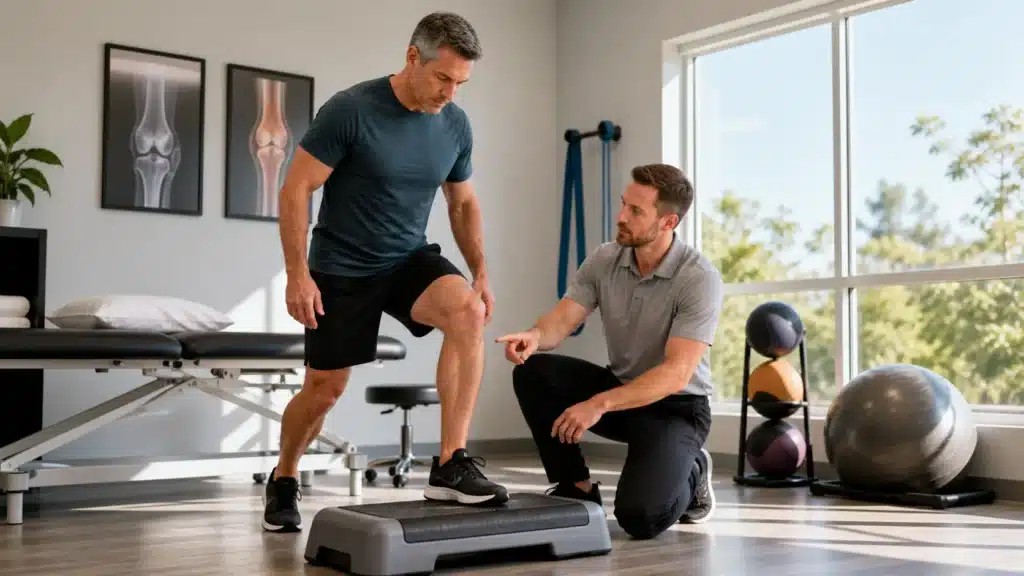
- Step-ups on a low step, holding a rail or bench for balance
- Wall squats, sliding your back down the wall a short distance
- Calf raises on flat ground, holding on for support
- Sideways band walks with a light resistance band, if you have one
Aim for two short strength sessions each week to begin with. Cooler months, when we tend to spend more time indoors, can be a good season to build this habit. Over time, the goal is steady, comfortable progress, not pushing to the point of sharp pain.
Working with a physiotherapist or exercise physiologist can be very helpful. They can design a program that fits your body, job, and sport, and adjust it if your knees complain. Orthopaedic surgeons like Dr Tau Loseli often work closely with these professionals so that joint health is supported from several angles, not just by surgery.
Weight, Footwear, and Surfaces That Make a Difference
Every step places load through the knee. Carrying extra body weight for many years can increase that load and contribute to wear. Even modest weight loss can make walking, stairs, and work tasks feel easier on the joints. Changes do not need to be dramatic. Steady habits with food and activity are often more sustainable.
What you wear on your feet also matters:
- Choose shoes with good cushioning under the heel and forefoot
- Look for decent arch support and a stable heel, not a soft, sloppy back
- Replace worn-out shoes where the sole is uneven or very flat
- For work boots, check that they support the ankle and fit firmly without pressure points
Surfaces also play a role. Hard concrete and bitumen can be tougher on knees, especially for long walks or runs. Where possible, choose:
- Grass ovals or dirt tracks for walking or light jogging
- Gym floors with some cushioning for indoor sessions
- Flatter paths rather than steep, uneven paddocks if your knees are already sore
In winter and early spring around the Riverina, damp or slippery ground adds another challenge, so picking safer, more forgiving surfaces can help protect the knees and reduce fall risk.
When to Seek Expert Help and Shape Your Knee Future
There are times when it is wise not to wait. Red flags that suggest it is time to see your GP or an orthopaedic specialist include:
- Swelling that keeps coming back or does not settle
- Locking, where the knee gets stuck and will not fully bend or straighten
- The knee giving way or buckling under you
- Pain that wakes you at night or stops you from working
- Ongoing pain that limits walking, stairs, or sport
A knee assessment with a specialist such as Dr Tau Loseli usually involves a careful history, examination of your movement, and, if needed, scans to look more closely at the joint. Very often, the first plan is non-surgical, such as activity changes, targeted exercises, and other treatments tailored to your situation. Surgery is one option, not the automatic answer.
Having access to expert care locally means you can understand what is happening inside your knee sooner and make informed choices about your work, sport, and daily life. For some people, exploring knee surgery in Wagga is about planning for the future and knowing the options, even if surgery is not needed right now.
By adjusting exercise habits, adding a little strength work, checking footwear, and paying attention to early warning signs, you can take real steps this week to look after your knees. Small, consistent choices now can help protect your mobility, comfort, and quality of life in the years ahead.
Take The Next Step Toward Confident Knee Care
If knee pain is limiting your work, sport or everyday life, we are here to help you understand your options clearly and calmly. Learn how Dr. Tau Loseli approaches knee surgery in Wagga, including when surgery is appropriate and what recovery typically looks like. If you are ready to talk through your situation, please contact us so we can arrange a consultation tailored to your needs.